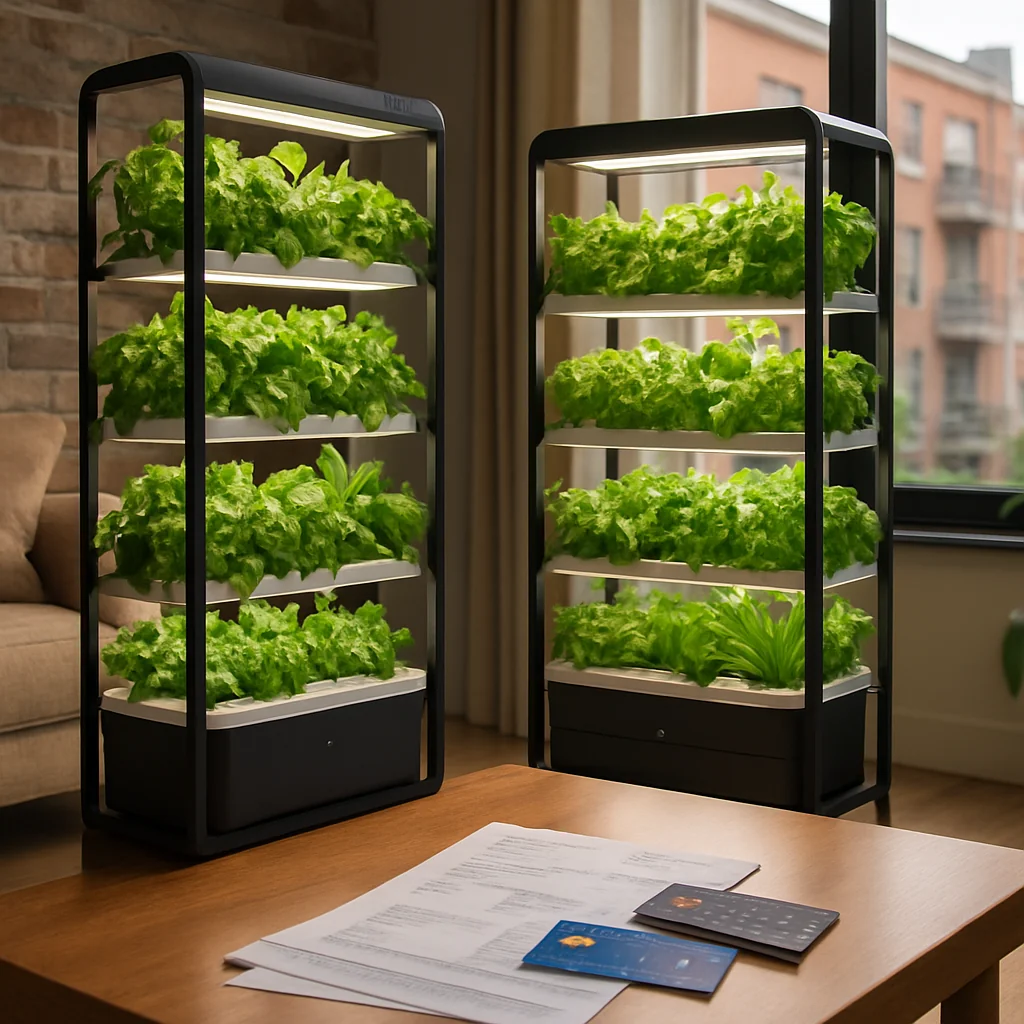
Did you know that urban vertical farming could transform the way we think about sustainability and income generation?
As cities grow and space becomes a premium, innovative solutions like AI-powered vertical farming are emerging as a viable option for urban dwellers.
Understanding the role of credit cards and banks in this entrepreneurial landscape is crucial, especially when comparing strategies for extra income and investments in businesses that grow fresh produce indoors.
In this article, we will explore how leveraging financial tools can enhance your success in the growing market of indoor agriculture, and how this translates into scalable home sustainability initiatives.
Understanding the Role of Credit Cards in AI-Powered Vertical Farming
Credit cards serve as a pivotal tool for entrepreneurs venturing into the realm of AI-powered vertical farming within urban apartments.
They offer immediate purchasing power, enabling aspiring farmers to acquire essential equipment such as LED grow lights, hydroponic systems, and nutrient solutions without the need for upfront cash.
This financial flexibility is crucial, particularly for those just starting their indoor farming journey, as it allows them to invest in quality gear that can significantly enhance productivity.
Furthermore, credit cards often
Furthermore, credit cards often come with various rewards and cash-back programs that can provide additional financial benefits.
For instance, urban farmers can earn cash back on purchases made for their farming supplies, which can be reinvested into their business.
This creates a cyclic benefit, where every dollar spent not only helps in immediate needs but also contributes to long-term growth and sustainability.
Consider scenario where new
Consider a scenario where a new vertical farmer applies for a credit card that offers a 5% cash back on all purchases related to home improvement and gardening.
If they spend $1,000 on their initial setup, they effectively receive $50 back, which can be used to purchase seeds or additional equipment.
This financial strategy not only alleviates the burden of initial investments but also incentivizes prudent spending.
Moreover, utilizing credit cards wisely can improve a business’s credit score, facilitating access to larger loans in the future.
As these entrepreneurs grow their operations, they may need additional funding for expansion.
A robust credit profile, built through responsible use of credit cards, can enable them to secure loans at favorable interest rates, further driving their success in the sustainable agriculture market.
In conclusion, credit cards play a vital role in the entrepreneurship of AI-powered vertical farming by providing essential purchasing power, financial rewards, and long-term credit benefits.
Understanding how to leverage these financial tools can significantly enhance the viability and success of urban farming ventures.
Banks and Their Importance in Financing Vertical Farming Ventures
Banks play a crucial role in supporting the entrepreneurship of vertical farming. Specifically, as urban agriculture gains momentum, the financial backing from banks becomes essential for aspiring entrepreneurs.
Vertical farming in urban apartments requires significant initial investments in technology, infrastructure, and ongoing operational costs.
Therefore, understanding how banks can provide tailored financing options is vital for success.
Firstly, banks offer various
Firstly, banks offer various financial products designed for agricultural businesses, including loans and lines of credit.
These products can help entrepreneurs manage their cash flow effectively.
For instance, a startup vertical farm may opt for a line of credit to purchase hydroponic systems and LED grow lights, allowing them to spread out their expenses over time.
This flexibility can be particularly beneficial during the initial stages when revenue may be low.
Moreover, understanding the application
Moreover, understanding the application process for agricultural loans is essential.
Entrepreneurs must prepare detailed business plans that outline their operations, market potential, and financial forecasts.
Banks typically look for viable strategies that demonstrate how the business will generate income.
For example, a vertical farm focusing on organic herbs could highlight the growing demand for fresh, locally sourced produce, showcasing potential sales channels such as farmers’ markets and local restaurants.
Additionally, banks often provide resources and guidance to help entrepreneurs navigate the complexities of financing options.
Many institutions have dedicated teams that specialize in agricultural finance, offering personalized support to help businesses succeed.
This support can be invaluable, especially for new entrepreneurs entering the vertical farming sector.
In conclusion, leveraging bank financing is critical for those looking to embark on vertical farming ventures in urban settings.
By understanding the available financial products and the application process, entrepreneurs can secure the necessary funding to cultivate fresh produce indoors, ultimately contributing to sustainable urban living and scalable markets.
Extra Income Strategies for AI-Powered Vertical Farming Entrepreneurs
Urban vertical farming presents unique opportunities for entrepreneurs. As the demand for fresh produce increases, leveraging innovative strategies can lead to substantial extra income.
One of the most effective approaches is selling produce directly to consumers via subscription services.
Subscription models offer a steady revenue stream, allowing customers to receive fresh, locally grown produce delivered to their doorstep.
For example, a startup could offer weekly boxes containing a variety of greens, herbs, and seasonal vegetables.
This model not only builds customer loyalty but also reduces marketing costs, as satisfied customers often refer others.
Additionally, with a subscription service, farmers can better predict demand and optimize their production cycles, which enhances overall efficiency.
Moreover, utilizing social media for marketing and outreach is crucial for reaching a broader audience.
Platforms like Instagram and Facebook allow entrepreneurs to showcase their unique produce and engage directly with potential customers.
By sharing visually appealing content and educational posts about the benefits of indoor-grown veggies, businesses can cultivate a community of health-conscious consumers.
For instance, featuring recipes or sustainability tips can inspire followers to support local farming initiatives.
Furthermore, social media advertising can target specific demographics interested in organic living or urban sustainability, enhancing conversion rates.
The combination of direct sales through subscriptions and a strong online presence can significantly increase revenue for vertical farming businesses.
In conclusion, exploring these extra income strategies not only supports the growth of AI-powered vertical farming but also contributes to expanding the scalable home sustainability markets.
As entrepreneurs adopt these methods, they position themselves at the forefront of a thriving industry.
Investments in AI-Powered Farming: What You Need to Know
Investing in AI-powered vertical farming is becoming increasingly attractive for entrepreneurs. This innovative approach not only addresses the growing demand for fresh produce in urban settings but also contributes to sustainability goals.
However, understanding the startup costs and potential return on investment (ROI) is crucial for anyone considering entering this field.
The initial expenses for
The initial expenses for setting up a vertical farm can vary significantly based on the scale and technology employed.
For instance, a small indoor farm may require an investment of around $20,000 to $50,000 for basic infrastructure, including lighting, hydroponic systems, and climate control.
On the other hand, larger operations could see costs escalating to several hundred thousand dollars.
It’s essential to create a detailed business plan that outlines these costs while projecting potential revenues from produce sales.
To maximize roi, entrepreneurs
To maximize ROI, entrepreneurs should target their marketing strategies effectively.
For example, selling directly to consumers through farmers’ markets or subscription models can significantly increase profit margins compared to wholesale pricing.
According to recent studies, urban vertical farms that utilize direct-to-consumer sales can achieve an ROI of up to 50% within the first few years.
This emphasizes the importance of market research and consumer engagement in driving profitability.
Additionally, identifying investors interested in sustainable agriculture can provide the necessary capital and support for growth.
Many venture capitalists are increasingly focusing on eco-friendly initiatives, making it easier for entrepreneurs to secure funding.
Platforms like Credit Cards and Banks in AI-Powered Genealogy Services highlight innovative funding strategies that can be leveraged in this sector.
In conclusion, while the initial investment in AI-powered vertical farming can be substantial, the potential for sustainable income and growth is significant.
Entrepreneurs who understand the financial landscape and position themselves wisely within the market will be better equipped to thrive in this emerging industry.
Conclusion
In this article, we delved into the pivotal role of credit cards and banks in the entrepreneurship of AI-powered vertical farming for urban apartments.
You now understand how these financial tools can enhance extra income strategies and investments for businesses that grow fresh produce indoors.
It’s time to take action: explore financing options today to unlock your potential in this sustainable market.
Remember, the future of urban agriculture is bright, and with the right resources, you can be at the forefront of this revolution!