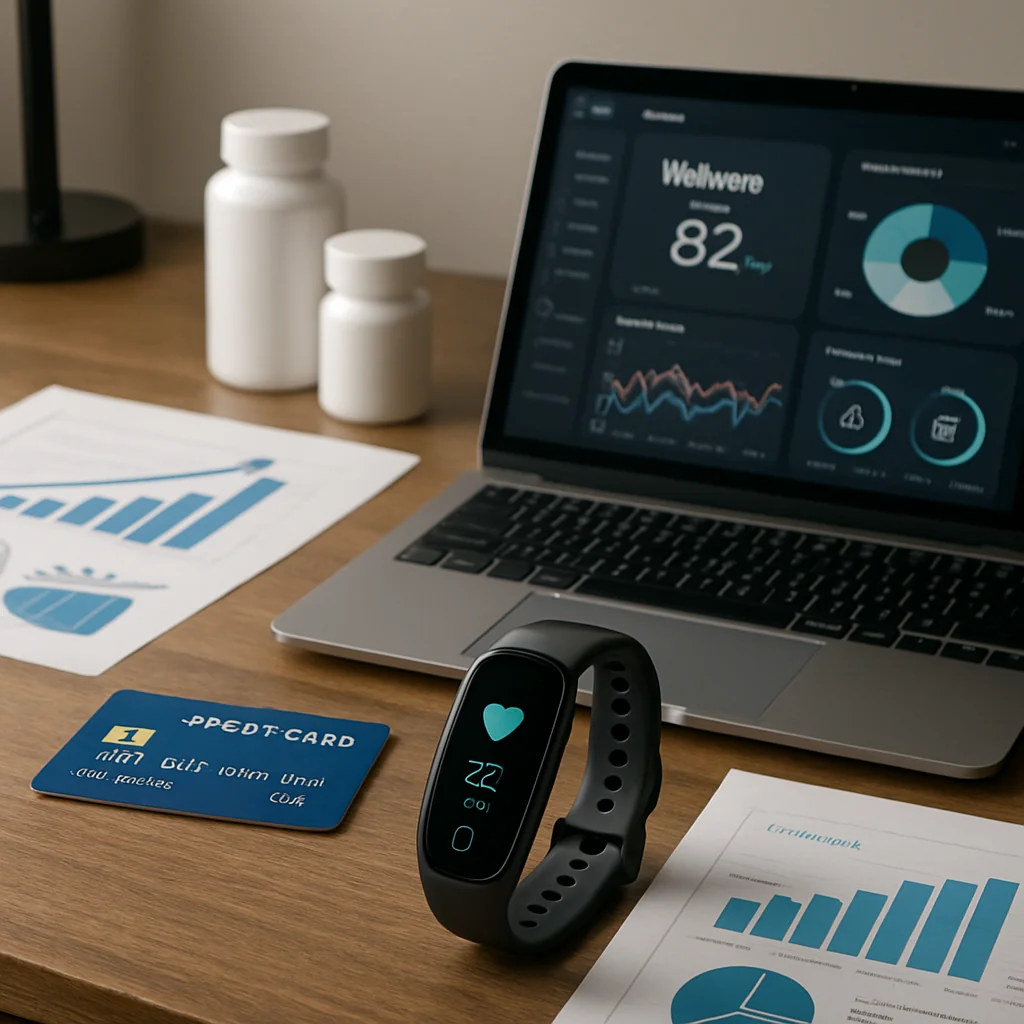
Did you know that the wearable health monitor market is projected to reach $60 billion by 2023?
This staggering statistic highlights the immense potential for entrepreneurs in the health tech sector, especially for remote workers.
In this article, we will explore the crucial role of credit cards and banks in the entrepreneurship of wearable health monitors, examining how they can facilitate side income strategies and investments.
Understanding these financial tools is essential for businesses that track wellness data and aim to expand scalable corporate health platforms.
By diving into this topic, you’ll discover effective ways to leverage financial resources and navigate the growing landscape of wearable technology.
Understanding Credit Cards and Banks in Wearable Health Monitor Entrepreneurship
The role of credit in supporting startups within the health tech industry cannot be overstated.
For entrepreneurs venturing into the field of wearable health monitors, having access to reliable financing options is crucial.
Credit cards, for instance, offer a convenient means of managing cash flow, especially in the initial phases of business development.
This flexibility allows entrepreneurs to invest in essential equipment and technology, ensuring their products meet the growing demand for health monitoring solutions among remote workers.
Moreover, banks play a pivotal role in facilitating investments in the wearable technology sector.
They provide various financial products tailored explicitly for entrepreneurs, such as business loans and lines of credit.
These financing options can empower startups to scale their operations effectively.
For example, a company designing innovative health monitors might secure a loan to enhance their research and development efforts, ultimately leading to improved product offerings.
Furthermore, understanding the financial landscape can equip entrepreneurs with the knowledge to make informed decisions.
Many banks offer specialized accounts that can help manage expenses and income streams effectively.
This financial acumen is vital as entrepreneurs explore side income strategies, such as partnerships with corporate wellness programs that utilize wearable data.
Such collaborations can yield significant returns, enhancing the overall sustainability of the business.
In conclusion, leveraging credit and banking services is essential for startups in the wearable health monitor space.
By harnessing these financial tools, entrepreneurs can innovate and thrive in a competitive market.
Side Income Strategies for Businesses Tracking Wellness Data
As the market for wearable health monitors expands, businesses must explore diverse income strategies. One of the most lucrative avenues is affiliate marketing in the health and wellness sector.
Companies can partner with health-related brands, promoting products that complement their wearable devices.
For instance, a business that sells smartwatches can collaborate with a fitness app, earning commissions for every subscription referral.
This strategy not only enhances customer engagement but also creates a recurring revenue stream.
Moreover, leveraging subscription models can significantly bolster income.
By offering premium features, such as personalized health insights or enhanced data analytics, businesses can ensure continuous revenue.
A company might implement a tiered subscription service, providing basic tracking for free while charging for advanced features.
This approach not only retains existing customers but also attracts new ones, especially remote workers seeking to monitor their health.
Additionally, the monetization of wellness data presents a promising opportunity.
Businesses can aggregate and anonymize health data to sell insights to healthcare providers or research institutions.
This practice has gained traction, as evidenced by the growing number of companies that leverage wellness data for product development.
With the right compliance measures in place, this strategy can significantly enhance profitability while contributing to health advancements.
In conclusion, exploring affiliate marketing, subscription models, and data monetization can pave the way for sustainable income in the wearable health monitor industry.
As businesses innovate, they can tap into multiple revenue streams, ensuring growth and resilience in a competitive market.
Investments in Wellness Data: A Key to Growth
Health data analytics is revolutionizing the way businesses approach wellness monitoring. As more remote workers prioritize health and well-being, companies have an opportunity to invest in technologies that capture and analyze wellness data.
This not only enhances employee engagement but also drives business growth through informed decision-making.
For instance, organizations that utilize wearable health monitors can gather real-time data on employee health metrics, such as heart rate and activity levels.
By analyzing this data, companies can identify trends and implement tailored health programs that boost employee morale and productivity.
A notable example is a tech startup that integrated health tracking into their employee benefits, resulting in a 20% increase in employee participation in wellness initiatives.
Additionally, investing in advanced technologies like artificial intelligence can further enhance data collection and analysis.
Companies that leverage AI-driven insights can personalize health programs, thus ensuring they meet individual employee needs effectively.
According to a recent study, businesses that invest in AI for health data analytics see an average ROI of 30% within two years.
Ultimately, as businesses recognize the value of wellness data, they can position themselves as leaders in employee health.
This strategic investment not only fulfills corporate social responsibility but also enhances operational efficiency.
Exploring credit card and banking strategies can provide the necessary financial support to implement these initiatives successfully.
Building Scalable Corporate Health Platforms with Credit Support
In the rapidly evolving landscape of remote work, establishing scalable corporate health platforms is crucial. Credit products play an essential role in supporting businesses that aim to monitor and enhance employee wellness through wearable health technology.
First, identifying the right credit products is vital for scaling operations effectively.
For instance, business credit cards can offer not only funding but also valuable rewards and cashback on health-related expenses.
Companies can leverage these benefits to reinvest in their health initiatives, creating a cycle of growth and improvement.
Moreover, banks are increasingly recognizing the importance of corporate health initiatives.
Financial institutions are now offering tailored financing options that cater specifically to businesses investing in health technology.
For example, a bank might provide low-interest loans for companies looking to develop wearable devices that track employee health metrics.
This support can significantly alleviate the financial burden associated with research and development.
However, managing debt while growing a business remains a critical concern.
Businesses must adopt best practices such as maintaining a clear budget, monitoring cash flow, and setting realistic financial goals.
By doing so, they can ensure that the pursuit of innovation does not compromise their financial stability.
In conclusion, the integration of credit support in building scalable corporate health platforms is a strategic move that can enhance employee wellness and drive business growth.
As the industry continues to evolve, staying informed about financial strategies will be crucial for success.
Challenges and Solutions in Financing Wearable Health Monitor Startups
Securing funding for wearable health monitor startups can be daunting. Entrepreneurs often face unique challenges that can impede their progress.
One common pitfall is the lack of a solid business plan that clearly outlines market potential and revenue streams.
Without this, investors may hesitate to commit their resources.
For instance, a startup that aims to develop a new health monitoring device may struggle to demonstrate its unique value proposition if it cannot effectively convey data on its target market and competitive advantages.
To improve creditworthiness, entrepreneurs should focus on building a strong credit history.
This can be achieved by managing personal finances responsibly and ensuring timely payments on any existing debts.
Additionally, leveraging credit cards with reward programs specifically designed for startups can help manage expenses while building credit.
For example, using a credit card that offers points for every dollar spent can enable startup founders to accumulate rewards that can be reinvested into the business.
Moreover, exploring alternative financing options is essential.
Traditional banks may not always be the best fit for innovative health tech ventures.
Crowdfunding platforms, angel investors, and venture capitalists are viable alternatives.
For instance, many successful startups have raised significant capital through crowdfunding by showcasing their concepts to a broad audience.
This not only secures funding but also tests market interest, mitigating risks before launching products.
In conclusion, while challenges in financing wearable health monitor startups are significant, they are not insurmountable.
By addressing common pitfalls, enhancing creditworthiness, and exploring diverse financing options, entrepreneurs can pave the way for success in this rapidly evolving field.
For more insights on financing strategies, consider reading about Credit Cards and Banks in AI-Powered Nutrition Kits.
Conclusion
Throughout this article, we delved into the crucial role of credit cards and banks in the entrepreneurship of wearable health monitors for remote workers.
Understanding the interplay between financial strategies and wellness technology empowers you to harness the potential of side income strategies and investments.
Now is the time to take action: explore your financing options and invest in innovative health solutions that can transform the way businesses track wellness data.
Embrace this opportunity to create scalable corporate health platforms and lead the charge in the future of health monitoring!