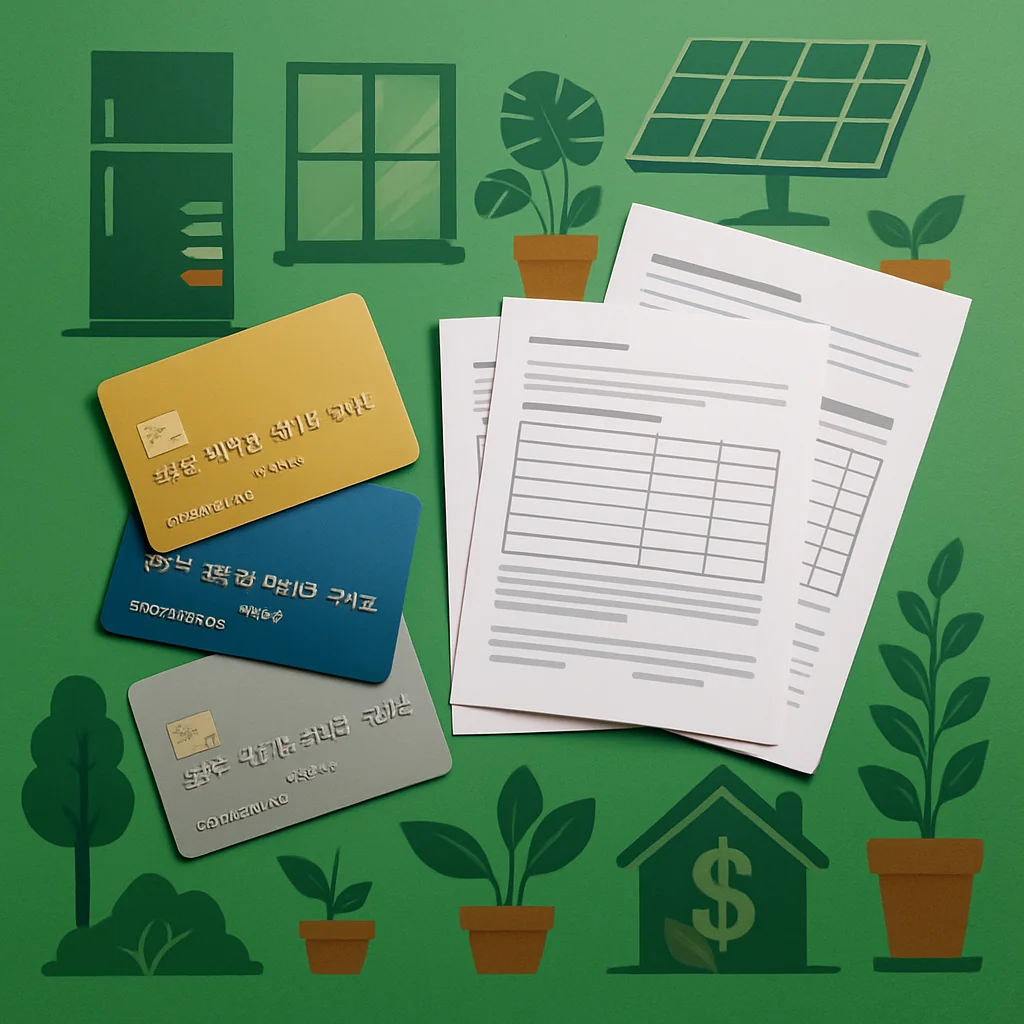
Did you know that nearly 70% of homeowners are considering eco-friendly upgrades to reduce their carbon footprint?
This statistic highlights a significant shift towards sustainable living and the increasing demand for environmentally conscious home improvements.
In this article, we will explore how credit cards and bank financing can be the key to unlocking not only energy-efficient upgrades but also the potential for generating extra income and investing in green funds.
By leveraging financial tools, you can transform your home into a sustainable haven while cultivating a portfolio that aligns with your values.
Understanding Credit Cards for Eco-Friendly Upgrades
Credit cards can be a powerful tool for financing eco-friendly home upgrades that not only enhance your living space but also contribute positively to the environment.
With the rise of sustainable living, many credit cards now offer rewards specifically for eco-conscious purchases.
For instance, using a credit card that provides cash back or points on green products can significantly offset the expenses of upgrading your home.
When considering credit cards,
When considering credit cards, it’s crucial to look for those with reward programs tailored to sustainable purchases.
These can include incentives for buying energy-efficient appliances, solar panels, or even sustainable home materials.
By using such cards, homeowners can essentially earn money back while investing in their home’s sustainability.
For example, a credit card that offers 5% cash back on home improvement purchases can lead to substantial savings when upgrading to energy-efficient windows or insulation.
Additionally, understanding your credit
Additionally, understanding your credit limit is vital.
A higher credit limit can enable you to fund significant home improvements without straining your finances.
This can be particularly helpful for larger projects, such as installing a solar energy system, which may require a considerable upfront investment.
By planning your expenses carefully, you can leverage your credit limit to manage costs effectively while still making impactful upgrades.
However, it’s equally important to grasp the interest rates associated with your credit card.
High-interest rates can negate the savings you earn through rewards.
Therefore, developing a sound repayment strategy is essential.
For instance, paying off your balance in full each month can help you avoid interest charges, allowing you to maximize the benefits of your eco-friendly upgrades.
Remember, the goal is to invest in your home and finances wisely while promoting sustainability.
In conclusion, using credit cards wisely can facilitate eco-friendly home upgrades that generate additional income and pave the way for investments in green funds.
For more insights on financing strategies, consider exploring our article on Credit Cards and Banks for Home Gardening.
Bank Financing Options for Green Home Improvements
Investing in eco-friendly home upgrades can be a financially sound decision, particularly when looking to generate additional income or seed investments in green funds.
One of the most effective ways to finance these upgrades is through bank loans specifically designed for this purpose.
Understanding your financing options is crucial in making the right choice for your projects.
There are several types
There are several types of loans available for green home improvements, including green home improvement loans, personal loans, and home equity loans.
Green home improvement loans are often tailored for projects that enhance energy efficiency, such as solar panel installations or high-efficiency appliances.
These loans may come with lower interest rates, as lenders recognize the potential for energy savings.
For instance, the Federal Housing Administration (FHA) offers a 203(k) loan that allows homeowners to finance both the purchase of a home and the cost of upgrades.
On the other hand,
On the other hand, personal loans and home equity loans present different advantages.
Personal loans often have a quicker application process and can be secured without collateral, making them an attractive option for those who may not have significant equity in their home.
However, interest rates might be higher compared to home equity loans, which use your home as collateral.
Home equity loans generally offer lower rates and can be useful for larger projects, but they require substantial equity.
Understanding the application process and eligibility requirements for these loans is essential.
Typically, lenders will assess your credit score, income, and existing debt to determine eligibility.
Additionally, having a clear plan for how the funds will be used to generate income can strengthen your application.
For further insights on utilizing credit for projects that yield returns, consider exploring Credit Cards and Banks for Home Gardening.
In conclusion, whether you opt for a green home improvement loan, personal loan, or home equity loan, understanding the benefits and requirements of each option will empower you to make informed decisions.
Choosing the right financing can significantly impact your ability to create a sustainable home while also setting the stage for future investments in green initiatives.
Generating Income Through Eco-Friendly Home Upgrades
Investing in eco-friendly home upgrades not only benefits the environment but also has the potential to generate extra income. By making green improvements, homeowners can significantly reduce their energy bills while also increasing the value of their properties.
One of the most impactful upgrades is the installation of solar panels.
These systems harness the sun’s energy, allowing homeowners to produce their own electricity.
In many cases, excess energy generated can be sold back to the grid, creating a passive income stream.
Additionally, solar panels can lead to substantial savings on monthly energy bills, freeing up funds that can be reinvested in other ventures or savings.
Another excellent upgrade involves the use of energy-efficient appliances.
These appliances consume less energy, which translates to lower utility costs.
For example, upgrading to an Energy Star-rated refrigerator or washing machine can save hundreds of dollars over time.
Moreover, many consumers are now prioritizing sustainability in their purchasing decisions, meaning homes equipped with energy-efficient appliances may command higher selling prices.
It’s essential to consider the potential for increasing property values through these green improvements.
Research indicates that homes with eco-friendly features sell for an average of 4% to 10% more compared to traditional homes.
This trend is driven by a growing market of environmentally conscious buyers who are willing to pay a premium for sustainable options.
In summary, eco-friendly home upgrades not only lower energy bills but also create opportunities for passive income and enhance property values.
By utilizing credit cards and bank financing as tools for these investments, homeowners can embark on a sustainable journey that pays off in the long run.
For further insights on how financing can support green initiatives, consider exploring credit cards and banks for home gardening.
Seeding Beginner Investments in Green Funds
Investing in green funds offers an excellent opportunity for individuals looking to align their financial goals with eco-friendly initiatives. Green funds are investment vehicles that focus on companies and projects contributing to environmental sustainability.
These funds typically invest in sectors such as renewable energy, sustainable agriculture, and eco-friendly technologies.
By participating in green funds, investors not only support the planet but can also reap financial rewards.
For example, the global green bond market has seen a significant increase, with issuance surpassing $300 billion in recent years, showcasing the growing investor interest in sustainable practices.
Getting started with green funds requires minimal investment and can often be done through platforms that offer fractional shares.
Many investment apps allow users to start with as little as $100, making it accessible for beginners.
Additionally, some credit cards offer rewards that can be directed towards sustainable investments, effectively allowing consumers to build their investment portfolios while making eco-friendly purchases.
Moreover, connecting eco-friendly home upgrades to investment opportunities can create a synergistic effect.
For instance, installing solar panels not only reduces energy costs but also increases property value, making it a smart investment.
Homeowners can finance these upgrades through credit cards with promotional offers or bank loans, and the savings generated can be reinvested into green funds.
In conclusion, seeding beginner investments in green funds is a practical approach that aligns financial growth with environmental responsibility.
By leveraging credit cards and bank financing to fund eco-friendly home upgrades, individuals can create a sustainable financial future while contributing to a greener planet.
For further insights on how to finance additional eco-friendly projects, check out our article on Credit Cards and Banks for Home Gardening: Financing Strategies for Extra Income.
Conclusion
Throughout this article, we’ve uncovered the transformative potential of using credit cards and bank financing for eco-friendly home upgrades.
These upgrades not only reduce your carbon footprint but also generate extra income and facilitate beginner investments in green funds.
Now is the time to take action: explore financing options and start your journey toward a sustainable and financially rewarding future.
Embrace this opportunity and watch as your eco-friendly initiatives pave the way for a prosperous tomorrow!